


Kenya Fuel Crisis 2026: Economic Impact on Businesses, Inflation & the Shilling
Kenya Fuel Crisis 2026: Economic Impact on Businesses, Inflation & the Shilling
The 8020 Insight Behind Kenya’s Fuel Crisis
The Real Cost of a Fuel Crisis in Kenya
Oil is not just another commodity.
It is the backbone of transport, power, and production.
So when it shifts, everything moves. Right now in Kenya, attention is fixed on the pump. But the real impact of the ongoing fuel crisis is unfolding across the economy, driven by structural vulnerabilities, policy responses, and market behavior.
Recent investigations into the scandal reveal deeper systemic risks, including alleged manipulation of fuel stock data to create artificial shortages and justify emergency procurement.
👉 You can read more here:
- Inside Kenya’s Easter fuel saga
- Ruto vows action over KSh4 billion fuel scandal
- Top energy officials resign over fuel scandal
These aren’t just governance failures.
They are economic shock triggers.
The 8020 Reality Most Are Missing
80% of the economic impact of a fuel crisis happens outside the fuel sector.
Only 20% happens at the pump.
Why This Matters to Business, Policy, and Society
1. Transport Costs Rise Instantly
Fuel drives logistics. From matatus to nationwide supply chains, cost increases ripple immediately across sectors.
2. Production Costs Increase Quietly
Manufacturing, agriculture, and services all depend on fuel. Businesses often adjust pricing before official fuel hikes are announced.
3. Inflation Accelerates Across the Economy
Rising transport and production costs translate into higher prices for goods and services, effectively driving inflation.
4. The Kenyan Shilling Comes Under Pressure
Kenya imports 100% of its fuel in US dollars.
As fuel prices rise:
- Demand for USD increases
- Forex reserves are strained
- The Kenyan shilling weakens
This creates a self-reinforcing loop where a weaker currency makes fuel even more expensive.
5. Households Feel the Impact Last, But Hardest
- Higher transport fares
- Increased food prices
- Reduced disposable income
By the time households feel the impact, the economic adjustment has already happened upstream.
A System Under Pressure
Kenya’s fuel crisis exposes deeper structural risks:
- Heavy reliance on imports
- Exposure to global oil price volatility
- Pressure on foreign exchange reserves
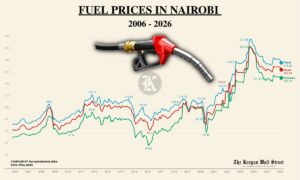
Kenya Fuel Prices
External shocks, including global supply disruptions, are already tightening the system. For instance, supply constraints linked to geopolitical tensions have affected fuel availability and triggered hoarding behavior among retailers.
The Real-Time Market Reaction
Markets don’t wait for official announcements.
They move on expectation.
Right now:
- Businesses are adjusting prices early
- Suppliers are hedging against uncertainty
- Consumers are reducing spending
This behavior often happens before policy or pricing updates are formally released.
What This Means for Business Leaders
The biggest risk is not rising fuel prices.
It’s reacting too late to their ripple effects.
Because by the time:
- Fuel prices increase
- Inflation is reported
- Currency pressure is visible
The market has already moved.
The 8020 Takeaway
The fuel crisis is not just an energy issue.
It is a full economic signal.
One that affects:
- Pricing strategy
- Supply chain resilience
- Consumer behavior
- Macroeconomic stability

Shell Fuel Station in Nairobi

🚨 Take Home
If your strategy only reacts after price changes are confirmed,
you’re not managing risk, you’re absorbing it.
At Research8020, we decode the signals behind the headlines,
so businesses can act before the market shifts.
Research8020 exists to help businesses make smarter, faster, market-backed decisions.
Contact us today, explore our services, and let’s build your next move on insight, not uncertainty.
Move early. Or pay later.